

Why I Do This Work
I haven’t come to resilience as a theory. I’ve come to it through real life: surviving breast cancer twice, navigating a complicated relationship with a mother whose addiction and dementia shaped her final years, working through my own mental health and marriage challenges, living with women’s health issues, and running a business for nearly 25 years while raising a family.
For a long time, I thought resilience meant “hold it together, no matter what.” Now I understand it as something different: the quiet, courageous decision to keep showing up as fully human—even when life looks nothing like the plan.
This resilience work grew out of a simple realization: women are already carrying so much, and we deserve spaces where our stories are seen, our strength is named, and we leave not just inspired, but better equipped to lead and live in ways that are authentic, courageous, and sustainable.
“Learning to Love the Dandelions” is my way of helping women see that the “weeds” in their lives—the diagnoses, the career pivots, the caregiving, the discrimination, the losses—are not proof of failure. They are proof of resilience. And in faith-based settings, they can also become powerful reminders that God meets us in the mess, not just in the moments that look beautiful and put-together.
What My Programming Includes
My resilience offerings meet women where they are and can be tailored for conferences, organizations, churches, and leadership programs. They include:
- Informal Talks & Fireside Conversations
Story-rich, conversational sessions that invite honesty and connection. Ideal for retreats, smaller groups, women’s ministries, and settings where people are ready to go beyond surface-level conversations and talk openly about faith, doubt, and real life. - Formal Presentations & Keynotes
Structured talks that blend personal stories with research on psychological resilience, flexible coping, and women’s leadership. These can be fully secular or explicitly faith-integrated, drawing on scripture, spiritual practices, and the language of calling and purpose. - Workshops & Interactive Experiences (Coming Soon)
Deeper-dive sessions where participants reflect on their own journeys, identify their existing resilience strengths, learn simple tools, and leave with a personal “resilience blueprint” they can use in life and leadership. In faith-based contexts, these workshops can incorporate prayer, scripture reflection, and guided small-group fellowship.
Across all formats, you can expect a mix of transparent storytelling, evidence-informed insights, reflection prompts, and practical tools that feel both grounded and doable—and, when desired, a clear connection to how God’s presence, grace, and community support us through hard seasons.
What Participants Will Take Away
Women who participate in this programming will:
- Redefine Resilience
Move from “I have to be strong all the time” to a kinder understanding of resilience as flexibility, support, meaning, and self-compassion—and, in spiritual settings, as a lived trust that God is at work even when circumstances are painful or unclear. - Recognize Their Existing Strengths
See their own lives—health challenges, caregiving, career shifts, relationships, identity transitions—as evidence of resilience, not evidence of falling short. - Learn Practical Tools
Leave with simple practices they can use right away: reframing setbacks, asking for and receiving support, setting boundaries, caring for their bodies and minds, and speaking to themselves with more compassion. In faith-based contexts, this can include grounding practices like prayer, meditation on scripture, and anchoring their identity in who God says they are. - Feel Less Alone
Experience the power of a room full of women saying, “Me too”—and, in church or spiritual communities, rediscover the gift of fellowship as a tangible expression of God’s care.


What Participants Will Take Away?
Women who participate in this programming will:
- Redefine resilience
Move from “I have to be strong all the time” to a kinder understanding of resilience as flexibility, support, meaning, and self-compassion—and, in spiritual settings, as a lived trust that God is at work even when circumstances are painful or unclear. - Recognize their existing strengths
See their own lives—health challenges, caregiving, career shifts, relationships, identity transitions—as evidence of resilience, not evidence of falling short. - Learn practical tools
Leave with simple practices they can use right away: reframing setbacks, asking for and receiving support, setting boundaries, caring for their bodies and minds, and speaking to themselves with more compassion. In faith-based contexts, this can include grounding practices like prayer, meditation on scripture, and anchoring their identity in who God says they are.
Feel less alone
Experience the power of a room full of women saying, “Me too”—and, in church or spiritual communities, rediscover the gift of fellowship as a tangible expression of God’s care.
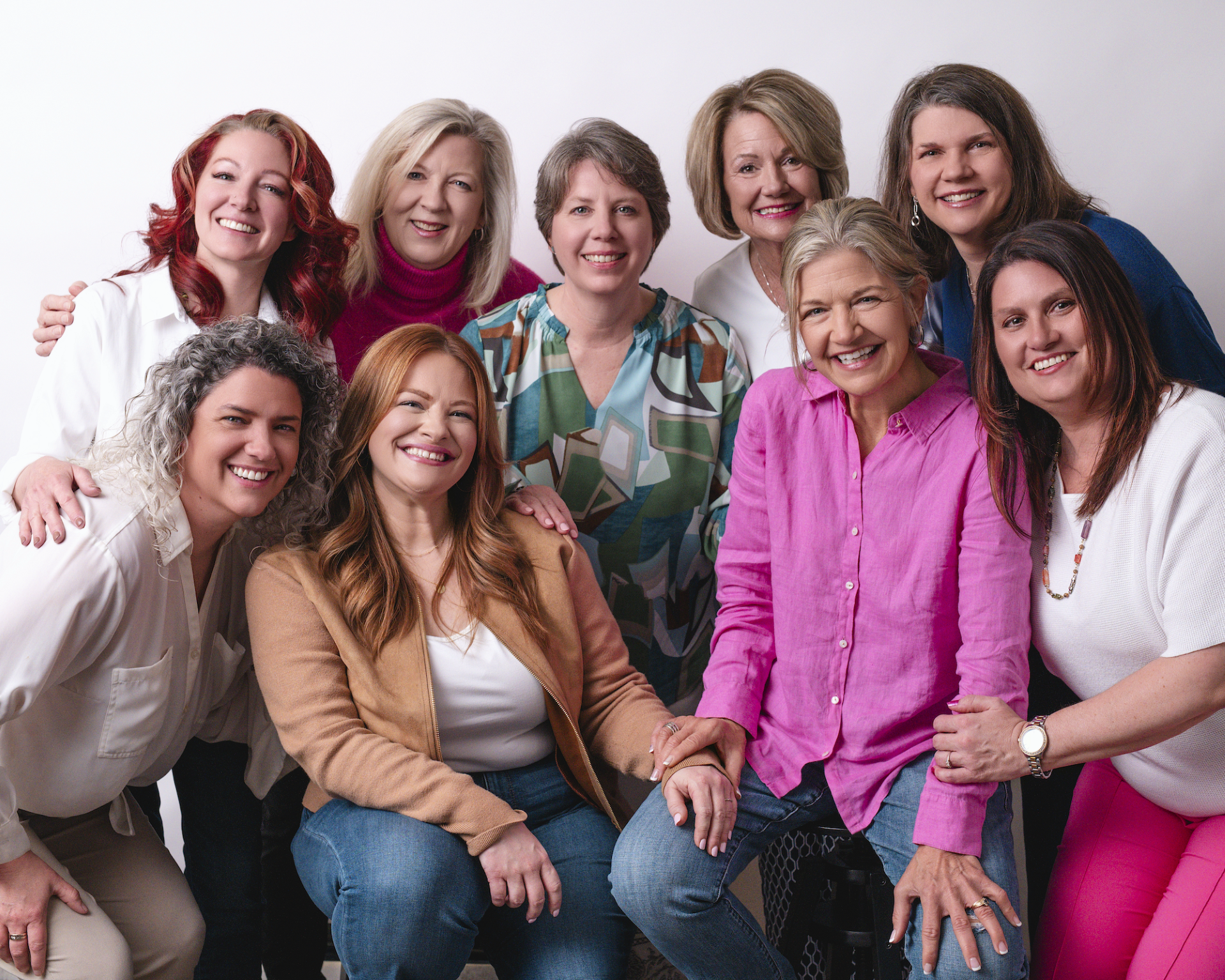
Why This Matters Especially for Women
Women are often leading on multiple fronts: in workplaces, families, friendships, communities, churches, and caregiving roles. Many of us are part of the “sandwich generation,” caring for children and aging parents while navigating ageism, sexism, health changes, and evolving careers.
We are praised for being “strong” and “capable,” yet rarely given space to admit what it costs—or to ask for help. We’re told to lean in, but not always taught how to rest, reset, or reimagine. We are often hardest on ourselves.
Resilience work that centers women:
- Names the unique pressures women face.
- Honors the invisible labor we carry.
- Challenges harmful narratives that equate worth with over-functioning.
- Affirms that caring for ourselves is not selfish; it is essential to leading well and living well.
In faith-based contexts, it also reminds women that their value is not measured by how much they do or how well they perform, but by their inherent worth as beloved daughters of God.
This is not about “fixing” women so they can tolerate more. It is about supporting women so they can lead, love, and live in ways that are aligned with who they really are—and, for people of faith, with the call and purpose God has placed on their lives.
Faith-Based Adaptation: Scripture, Fellowship, and God’s Presence
For churches and spiritual organizations, this resilience work can be intentionally rooted in:
- Scripture – Connecting themes of perseverance, hope, lament, and renewal to specific passages that validate struggle and highlight God’s faithfulness.
- Fellowship – Creating spaces where women can share their stories, pray for one another, and practice true community rather than quiet isolation.
- God’s Presence – Naming the ways God shows up in the middle of diagnosis, caregiving, loss, and transition—not always by removing hardship, but by sustaining and reshaping us through it.
Sessions can be framed around themes like “strength in weakness,” “beauty in broken places,” and “calling in changing seasons,” always with sensitivity to the diversity of women’s experiences of faith and church.
Connection to ATHENA and Women’s Leadership Circles
I am an ATHENA Certified Facilitator with ATHENA International, and I lead ATHENA Leadership Institute Women’s Leadership Circles based on ATHENA’s Eight Leadership Principles. These principles—Live Authentically, Learn Constantly, Build Relationships, Foster Collaboration, Act Courageously, Advocate Fiercely, Give Back and Celebrate—are deeply woven into my resilience work.
Resilience and ATHENA’s principles are natural partners:
- Living Authentically asks us to tell the truth about our lives, not just the polished parts.
- Acting Courageously is often less about grand gestures and more about making the next right, honest move in hard seasons.
- Building Relationships and advocating fiercely require us to recognize our own worth and the worth of other women.
- Celebrating means we honor not only the big wins, but the quiet everyday victories of getting up and trying again.
In my programming, participants don’t just hear these principles; they see how they play out in real stories and are invited to apply them to their own leadership journeys. For organizations that already know and value ATHENA, this resilience work deepens and animates the principles in a lived, embodied way. For faith communities, these same principles resonate strongly with scriptural calls to authenticity, courage, service, justice, and joy.
Why Invite Me to Work with Your Group
If you are planning a conference, retreat, leadership program, church event, or internal gathering for women, this resilience programming offers:
- A blend of story and science—deeply human, but also grounded and credible.
- The option to integrate scripture, prayer, and spiritual reflection alongside research and practical tools.
- A tone that is honest but hopeful, real but uplifting, with space for laughter and tears.
- Experiences that help women feel seen, validated, equipped, and re-energized in both life and leadership.
Women don’t need another message about “doing it all.” They need spaces that say: you are already more resilient than you know—and here are ways to honor that resilience, strengthen it, and lead from it, with God’s help and with one another.
If that’s the kind of experience you want to create, I’d love to partner with you.